
My approach begins with observation and problem definition: identifying confusion, delays, and unnecessary complexity. I look for patterns in user behavior, recurring questions, and operational bottlenecks to understand how workflows function in practice—not just how they were designed.
From there, I focus on practical improvements: restructuring information, aligning systems with real decision points, simplifying pathways, and reducing friction between people and technology. The goal is straightforward systems that are easier to understand, maintain, and use.
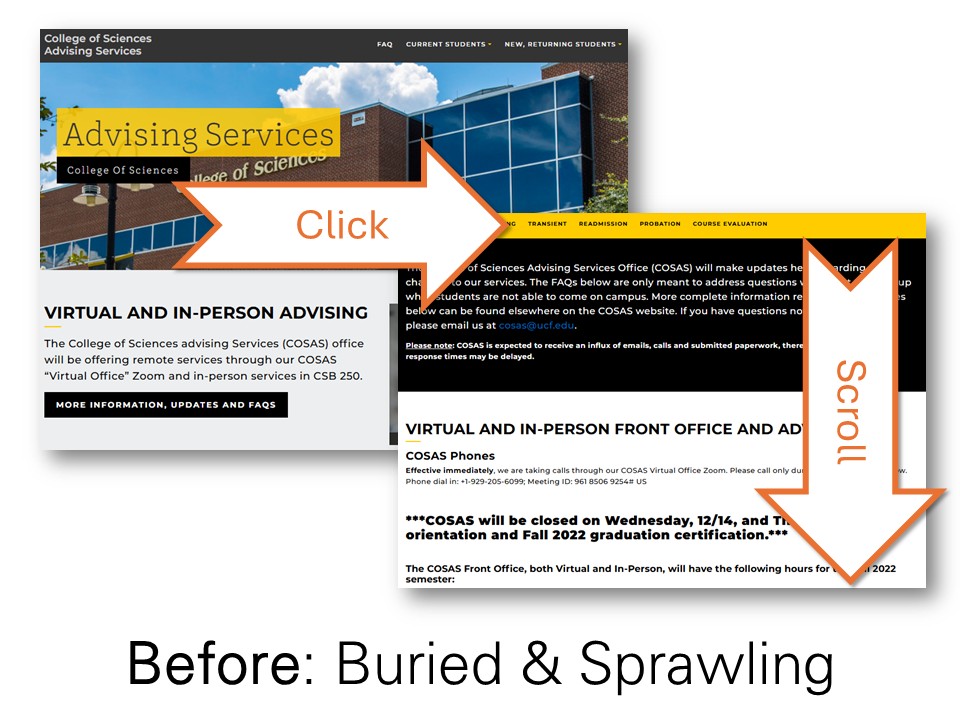
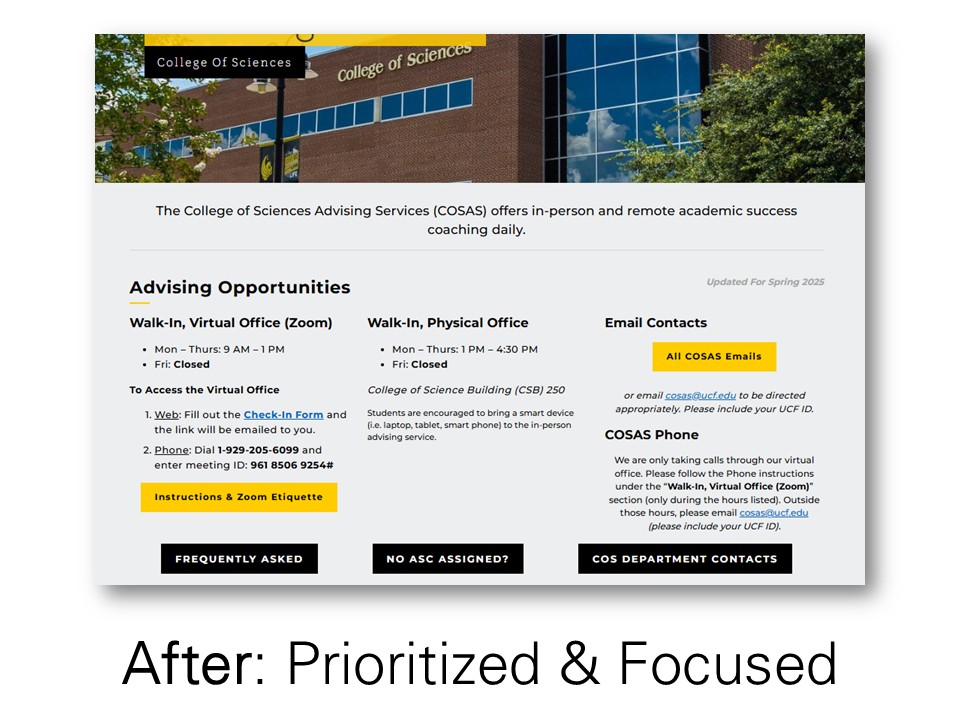
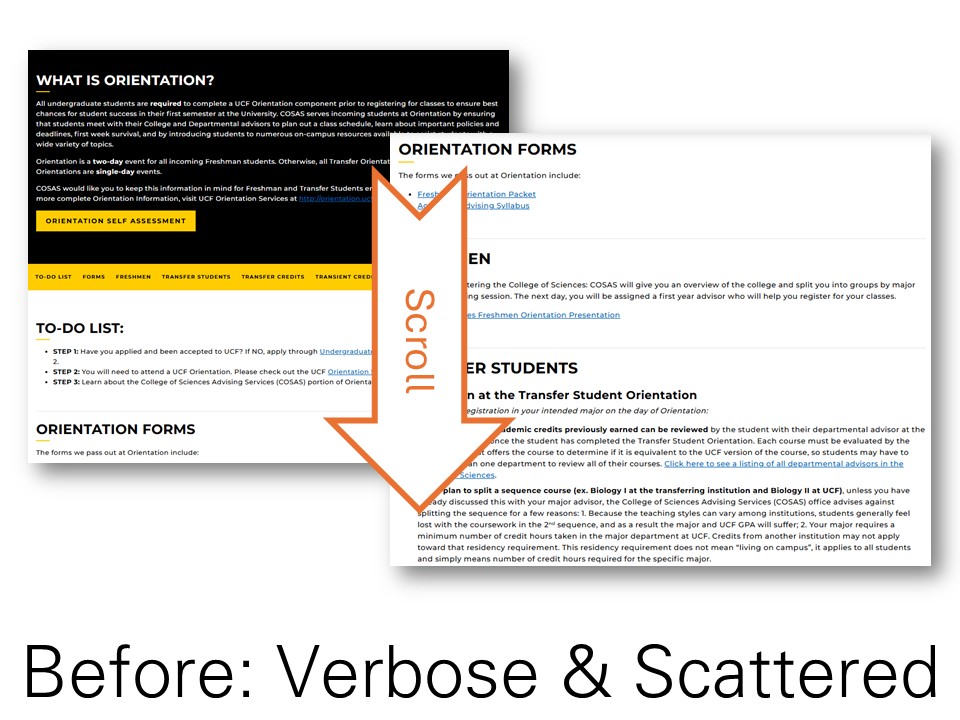
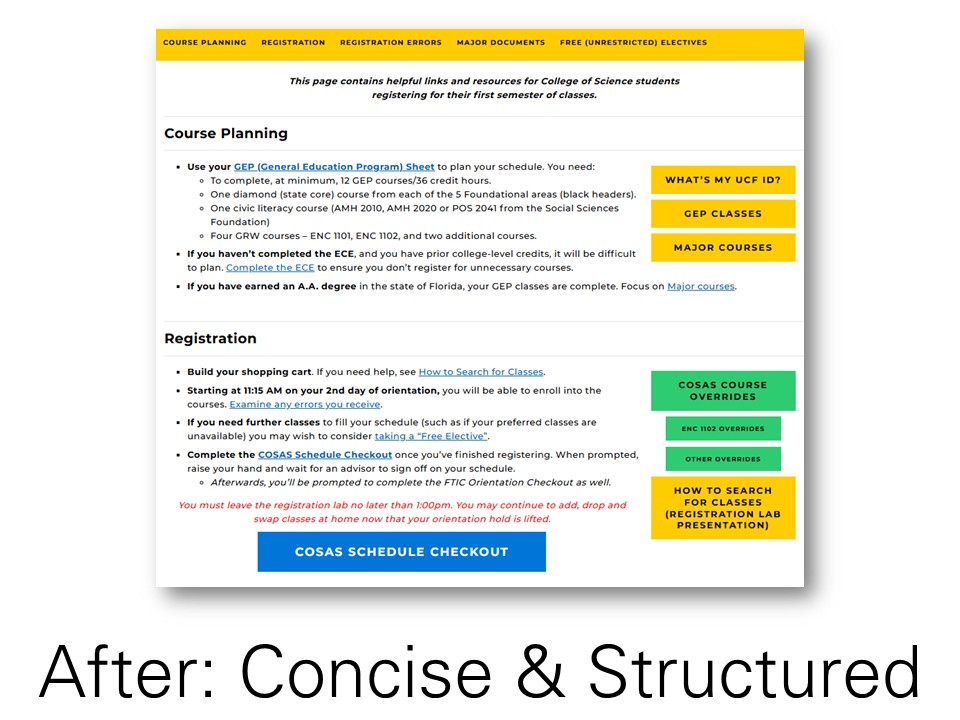
Student Service Web Workflow Redesign
Aligning web content with real student needs and workflows
- Category: Business Analysis, Process Improvement, User Experience, Web Content Strategy, Accessibility
- Organization: University of Central Florida
- Project date: 2024
- Considerations: University Style Guide adherence, Website governance, Planning & approval processes, Ease of maintenance.
- Project URLs: Orientation Page & Advising Front Page
Problem
- Students struggled to identify the starting point for advising or orientation tasks.
- High-priority information was buried or required multiple clicks to locate.
- Web content did not align with actual student workflows or the operational realities of advising and orientation.
- Poorly structured pathways created confusion, repeat questions, and unnecessary drop-ins.
Solution
- Analyzed recurring student questions and behavioral patterns.
- Reorganized content around user tasks, decision points, and service workflows.
- Surfaced critical actions and resources through clearer hierarchy, simplified language, and strong calls to action.
- Removed low-value navigation and redundant content to reduce cognitive load.
- Structured information to mirror the sequence of real-world events and decision points.
Impact
- Increased use of preferred contact channels.
- Reduced unnecessary drop-ins outside available hours.
- Fewer repeat questions from students seeking basic information during orientation.
- Reduced friction in advising and orientation workflows.
Logic-Imbued Redesign of Override Form
Workflow Analysis & Process Optimization for Students and Staff
- Category: Qualtrics, Form Design, User Experience, Accessibility
- Organization: University of Central Florida
- Project date: 2025
- Considerations: Workflow clarity, Maintainability, Intuitive progression, Governance and approval processes
- Project URL: https://sciences.ucf.edu/cosas/current-students/registration-overrides/#overrideform
Problem
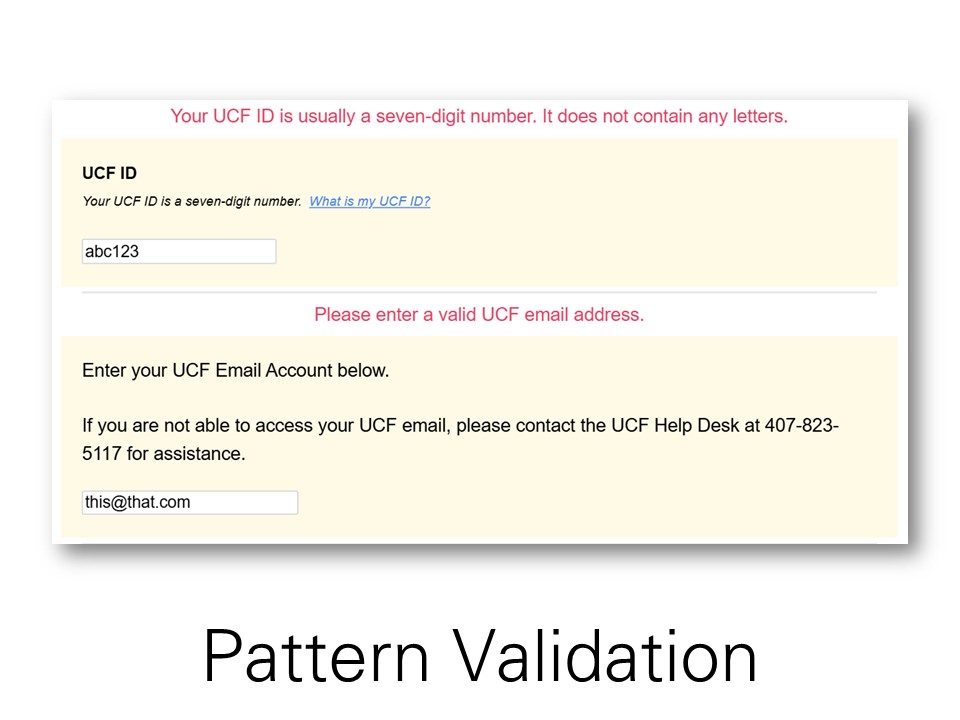
- High rate of incomplete or incorrect submissions.
- Manual follow-up during peak registration periods reduced staff availability.
- Redundant fields and unclear flow created user fatigue.
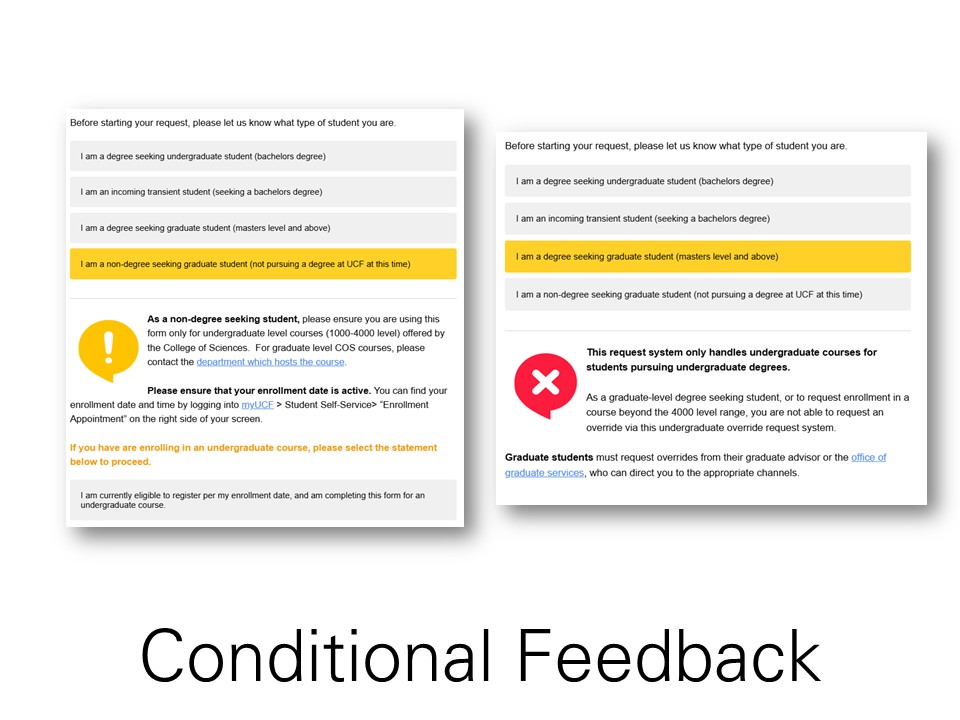
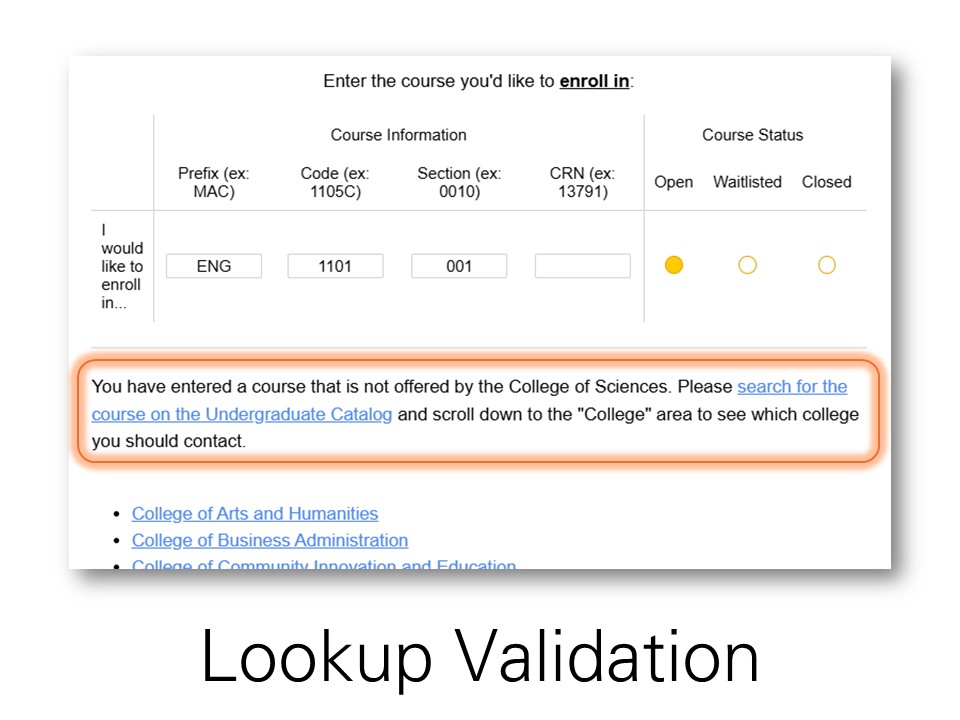
- Frequent submissions for courses outside the College of Sciences.
Solution
- Mapped the override process to identify breakdown points.
- Rebuilt the form using conditional branching and progressive disclosure.
- Implemented regex and list validation to prevent invalid submissions.
- Streamlined reporting to support efficient staff processing.
Results
- Substantial reduction in invalid and misdirected submissions.
- Decreased reliance on corrective email communication.
- Faster override processing.
- Reduced average registration lab time during orientation.
- Increased staff capacity for in-person student support.